Spiti vs. Ladakh: Which Epic Road Trip Should You Take Next?
Spiti vs Ladakh Road Trip: The Ultimate Comparative Analysis
It’s the million-dollar question that plays out in every adventure traveler's mind before packing their bags: Should it be the iconic valleys of Ladakh or the raw, rugged trails of Spiti?
Both destinations offer mind-blowing landscapes, cold mountain deserts, and ancient Tibetan Buddhist culture. Yet, the actual experience of driving or riding through them could not be more different. One rewards you with massive, world-record altitudes and smooth highways; the other tests your grit on some of the most treacherous, untouched dirt tracks on Earth.
If you are trying to decide which epic Himalayan road trip to cross off your bucket list next, this definitive head-to-head breakdown is for you.
At a Glance: The Core Differences
Before diving into the terrain and logistics, let's look at how these two legendary circuits stack up side by side.
| Feature | Ref: Ladakh Road Trip | Ref: Spiti Valley Circuit |
|---|---|---|
| Primary Route | Manali-Leh Highway or Srinagar-Leh Highway | Delhi/Chandigarh → Shimla → Kaza → Manali (Loop) |
| Road Conditions | 60-70% Smooth Tarmac. Well-maintained by the Border Roads Organisation (BRO). | 70% No Roads. Mostly dirt tracks, loose gravel, boulders, and active water crossings. |
| Peak Altitudes | Extremely High. Crosses passes like Khardung La (18,380 ft) and Umling La (19,300 ft). | Moderate to High. Highest points like Kunzum La hover around 14,931 ft. |
| Commercialization | High. Excellent tourist infrastructure, cellular networks, luxury camps, and hotels. | Low. Rustic homestays, remote guesthouses, and limited connectivity. |
| Ideal Duration | 10 to 14 Days | 8 to 10 Days |
| Best Time to Visit | June to September | June to October (Malling Nallah & Kunzum permitting) |
1. Terrain & Road Conditions: Smooth Tarmac vs. Raw Off-Roading
The biggest separator between these two trips is the state of the roads.
Ladakh: The Smooth Cruiser
Ladakh has transformed over the years into a highly accessible dream highway. The iconic Manali-Leh Highway and Srinagar-Leh Highway feature long stretches of blacktop tarmac winding beautifully through the mountains. While you will still encounter rough patches near high passes like Chang La or Taglang La, a significant portion of the drive feels like a smooth alpine cruise. It’s perfect for cruiser bikes, standard SUVs, and even confident sedan drivers.
Spiti: The Suspension Tester
Spiti Valley is not a drive; it’s an expedition. Known affectionately (and warningly) by overlanders as "no roads land," the stretch between Gramphu and Kaza is essentially a riverbed of boulders, loose shale, and pagal nallas (wild mountain streams cutting across the track). Spiti requires high-clearance 4x4 vehicles or adventure-touring motorcycles. It demands active, technical driving where a single mistake can stall you out in the middle of nowhere.
2. Landscape & Vibe: Grand Scale vs. Intimate Solitude
While both are technically cold deserts, they radiate completely different visual energies.
- Ladakh is all about scale. Everything here is massive. You are driving through wide, sweeping valleys flanked by purple-hued mountains under a piercingly blue sky. The sights are dramatic and world-famous—from the surreal, endless plains of More Plains to the breathtaking, lakeside shores of Pangong Tso and Tso Moriri.
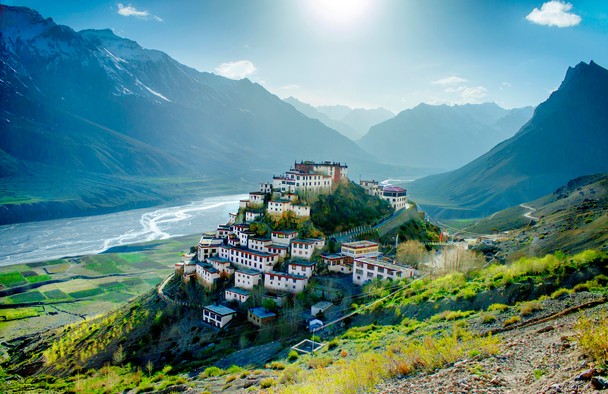
- Spiti is intimate and stark. The valleys are narrower, carved deeply by the roaring Spiti River. The mud-brick villages like Dhankar and Langza blend so perfectly into the jagged, fossil-rich cliffs that they look like optical illusions. Spiti offers raw solitude; you can drive for hours without spotting another tourist vehicle, giving you the hauntingly beautiful feeling of exploring the edge of the world.
3. Altitude and Acclimatization
Don't let the smoother roads of Ladakh fool you—its geography is much harsher on the human body.
Acute Mountain Sickness (AMS) Warning:
Ladakh's average altitude is significantly higher than Spiti's. Leh sits comfortably at 11,500 ft, but your excursions will quickly take you past 18,000 ft. A mandatory 48-hour rest period in Leh is strictly required to avoid altitude sickness.
In contrast, if you take the Shimla-Kinnaur route to Spiti, your altitude gain is incredibly gradual. You climb a few thousand feet each day, giving your body plenty of time to naturally adjust. By the time you reach Spiti's capital, Kaza (11,980 ft), your risk of severe AMS is dramatically lower than if you flew straight into Leh.
4. Stay, Food, and Infrastructure
Your comfort preference might easily make this choice for you.
Ladakh is fully equipped for tourism. You can choose between premium glamping sites with running hot water, boutique hotels in Leh, and reliable Wi-Fi zones. If your vehicle breaks down, a mechanic or a flatbed towing service is usually just a few hours away.
Spiti forces you to unplug. Luxury doesn’t exist here; instead, you get incredible, authentic hospitality. You will mostly stay in traditional Spitian homestays, eating home-cooked thukpa, momos, and local barley dishes with families. Mechanics are sparse, fuel pumps are limited (the petrol pump at Kaza is famously the highest in the world, and sometimes runs dry), and cellular data is a rare luxury.
The Ultimate Verdict: Which Should You Choose?
Go to Ladakh if:
- It’s your very first time taking a vehicle into the deep, high-altitude Himalayas.
- You want to cross world-famous bucket-list checkpoints (Khardung La, Pangong Tso, Magnetic Hill).
- You prefer having a reliable safety net of medical aid, hotels, and mechanics nearby.
Go to Spiti if:
- You are an experienced rider or driver looking for a genuine, hard-core off-roading challenge.
- You want to escape commercial tourism and experience untouched Tibetan culture in its purest form.
- You want to explore hidden spots, hunt for prehistoric marine fossils in Langza, and send a postcard from Hikkim (the world's highest post office) without battling crowds.
No matter which path you choose, both journeys will fundamentally change how you view road trips forever. Pack your bags, prep your machine, and respect the mountains!